

Hot People Care About Human Rights: A Conversation with Shardae on Diaspora, Empathy and Making Activism Look Good
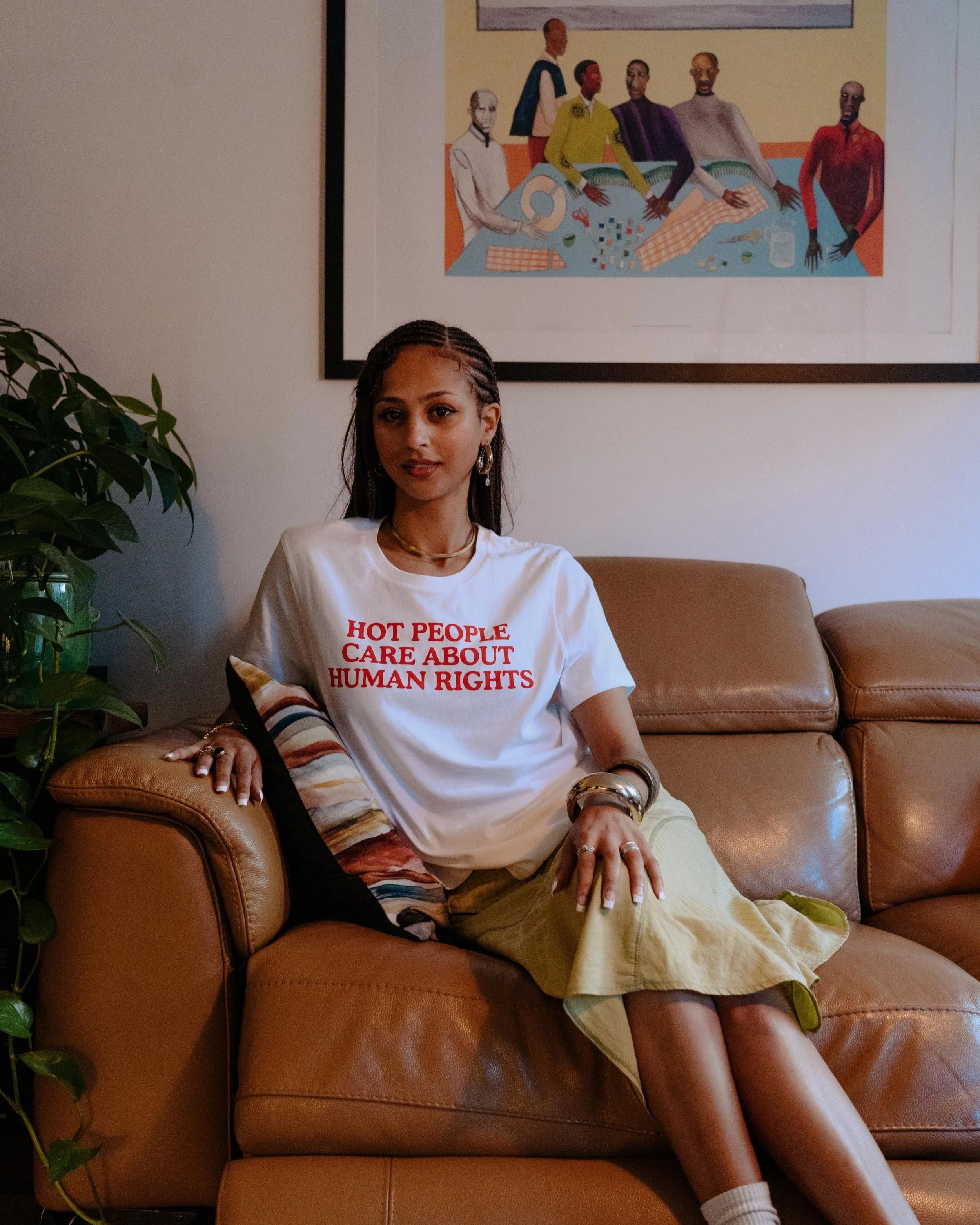
Interview written by Melissa Njugi
Images by Dennis Eluyefa
Creative Direction: Ebony Nnatu
In a culture obsessed with irony and individualism, caring about other people has started to feel almost radical.
But for Australian–Ethiopian creative and human rights advocate Shardae, empathy isn’t a ‘soft accessory’, it’s a political aesthetic. After working across
UN agencies from New York to Amsterdam, she launched ‘Hot People Care About’, a micro-movement turned streetwear drop that funds directly into grassroot initiatives.
The idea is simple enough: if you care about people, you’re hot — and if you don’t, you’re not.
We spoke to her about diaspora identity, creative advocacy, and why making impact work look cool might actually be the most effective disruption.
Q: Can you tell us a bit about yourself and what brought you into human rights work ?
My name is Shardae and I’m from Australia. I was brought up in the countryside on the outskirts of Melbourne and went to a Catholic private boarding school which was extremely strict. The racism I faced there was immense, so from a young age, I was aware and confronted by the inequalities and social constructs embedded in society. My dad, being a refugee, also taught me the importance of giving what you can and supporting your community, while my mom has always been deeply ‘for the people’. Because of them, caring about others was never optional; it was fundamental, and this upbringing is what shaped my values today and led me to want to do impact work.
Q: How did your studies and early experiences shape your career path?
I studied arts, majoring in media, culture, and communications in Sydney, and in my last year, I did an internship in Chennai, India, with a youth-led organization called Restless Development. I was a comms intern and was helping with the storytelling aspect. I was able to apply my creativity to do real impact work, and that internship made me realize this was a job I could actually do. After university, I applied for internships everywhere, from Viacom and Disney to UN Women. Eventually, I got an unpaid internship at UNWomen in New York doing social media toward the end of the MeToo movement in 2018, which was really inspiring to me, so I moved to New York and started from there.
Q: What was it like working at the UN and transitioning through different international offices?
At UN Women, it was really media-focused and advocacy-driven, pushing messages about gender equality and women’s empowerment. Then I moved to OCHA in Amsterdam, working on humanitarian campaigns like World Humanitarian Day,
collaborating with a Ukrainian creative agency during the Ukraine crisis. Later, I joined UNHCR, which was very special for me because my dad came to Australia with their support and I worked on campaigns about the right to seek asylum. Since 2019, I have moved around between New York, Amsterdam, and Lisbon, working remotely and exploring new creative projects.
Q: How do you view the concept of 'home' and community after living internationally?
I don’t feel like I really have a single home right now. I’m Australian but I don’t feel like that’s my home anymore.
I am lucky enough to have found community in all the different places I lived —my Ethiopian girlfriends in New York, my Dutch friends in Amsterdam,
and connections and friends in Lisbon and Barcelona, and now, since my recent move to London, my community continues to grow and I am only excited to see what can flourish. Home to me is definitely more about the people I’m with rather than a physical place. I try to see it as being a citizen of the world, as cliche as it may sound.
Q: When did you start sharing your own voice on social media?
I started posting more regularly when I moved to Amsterdam because I didn’t know many people there, which made it a lot easier. I started for fun, but it became a way for me to connect to people and share human rights advocacy in my own voice. Working with organisations like UNCHR meant adhering to a strict tone of voice and messaging, and while I had the knowledge and confidence to share what I had been learning, I wanted to
make it more accessible. My personal social media became an outlet to voice my frustrations and to normalize these types of conversations.
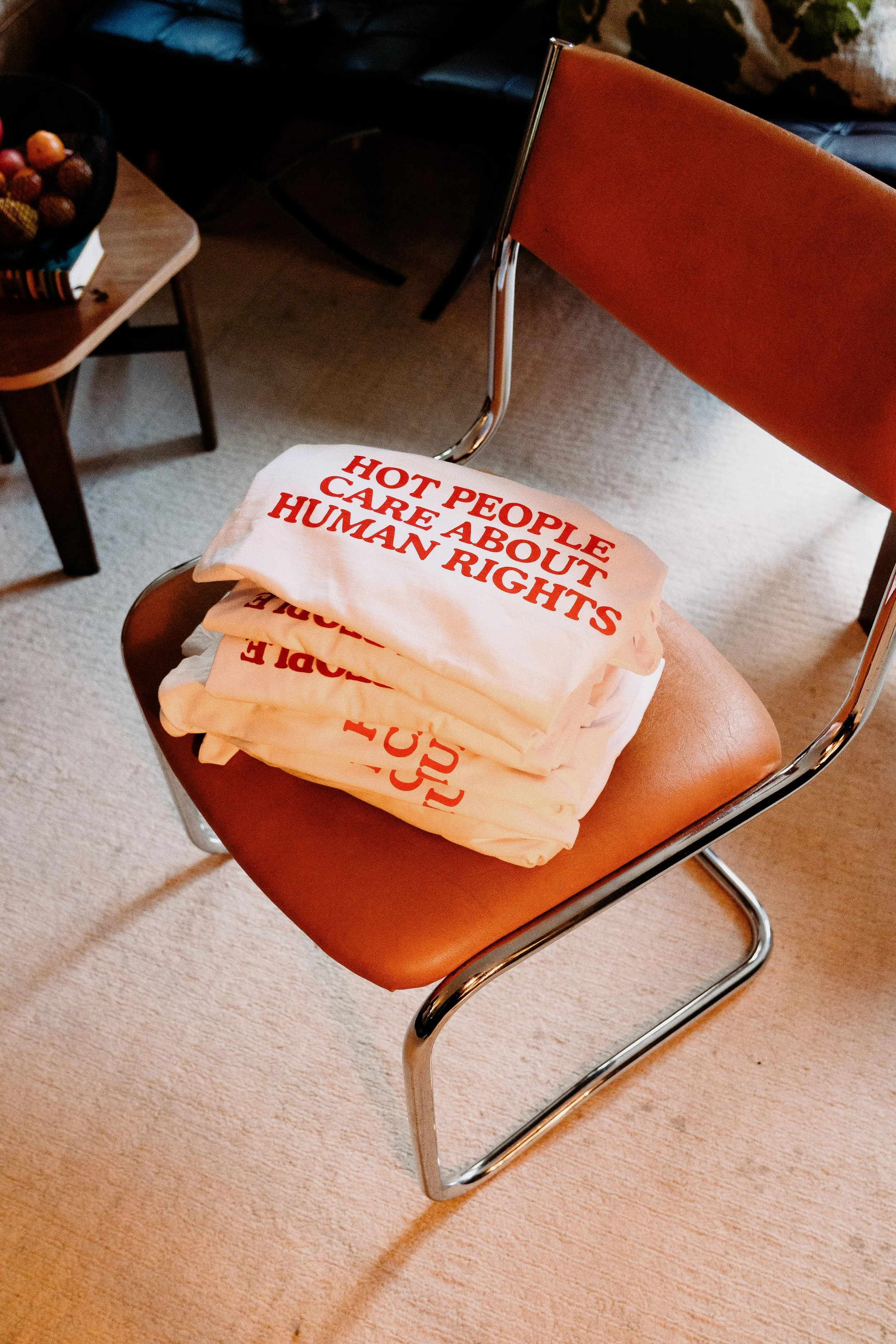
Q: How did the idea for 'Hot People Care About Human Rights' come about?
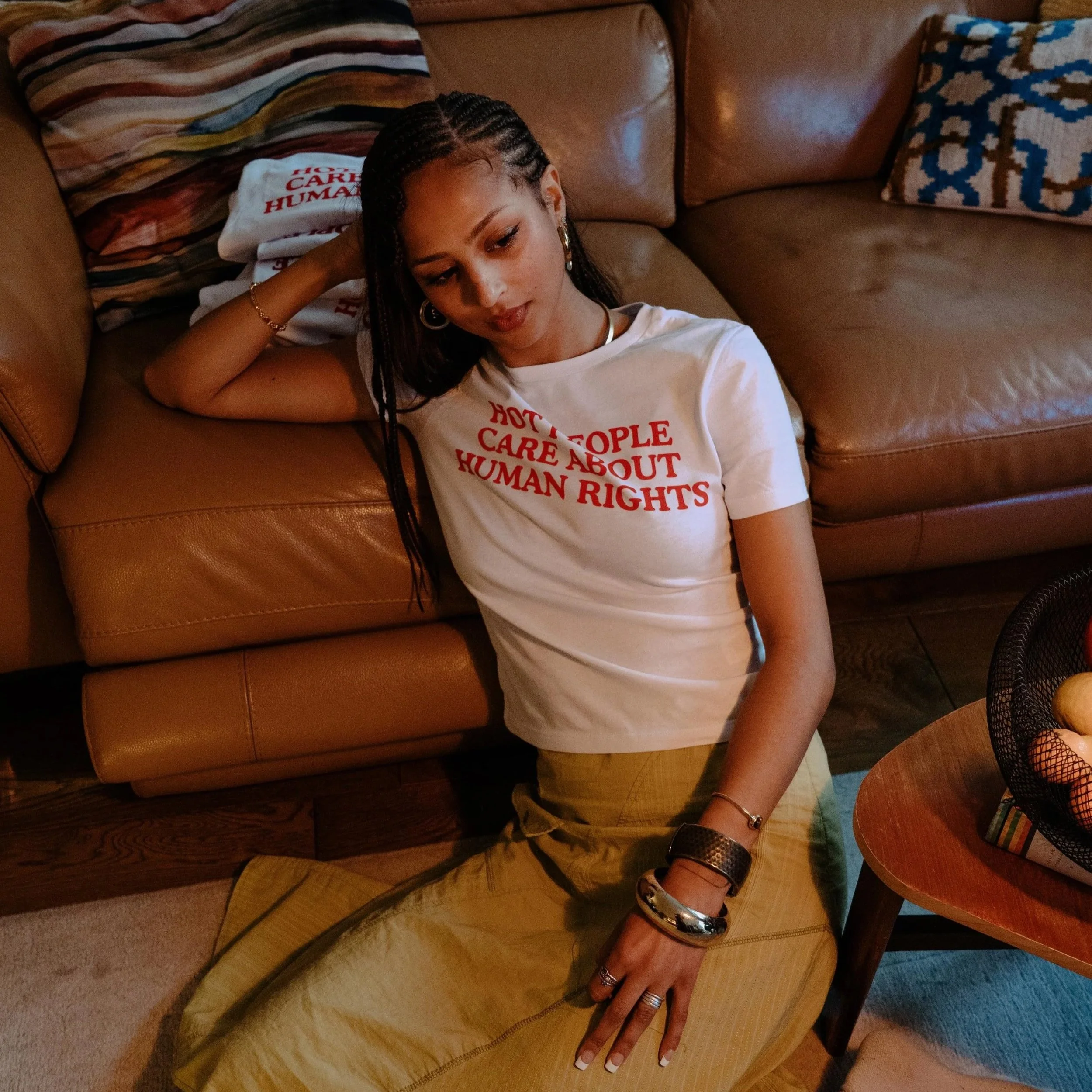
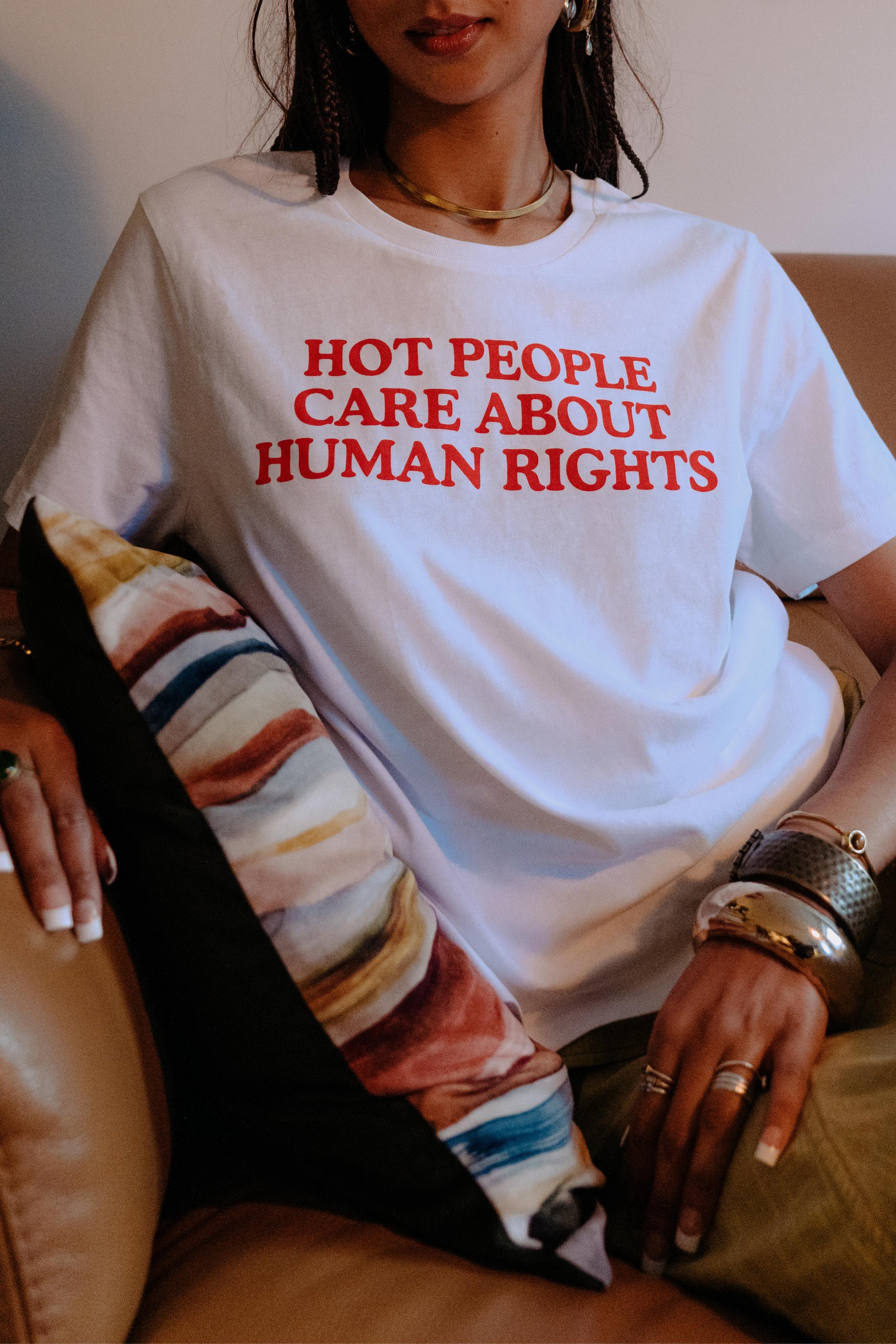
It started as an inside joke with friends, something we lived by. For Human Rights Day, I made two T-shirts just for myself. Some friends wanted them too, so I worked with a sustainable screen printing studio in Lisbon that’s run by a guy named Vitor, to do a small drop. I posted on TikTok, and people loved it, so I realized there was a real community for this kind of messaging. It’s about combating apathy with empathy — if you care about human rights, you’re a hot person.
If you don’t, well, you’re not.
Q: What impact has this project had so far?
The first drop sold out quickly and I was overwhelmed with gratitude. We sold about 50 T-shirts and raised around 1500 Australian dollars. The funds supported a Rohingya women’s workshop in refugee camps, buying 20 sewing machines and helping pay for university for a Rohingya kid in Thailand. It's small but the impact is real — empowering people with skills and dignity, not just handouts. There is also something so powerful in knowing exactly where the money goes and creating a meaningful connection for me and the community.
Q: What does being a 'hot person who cares about human rights' mean to you today?
It really does mean to go against apathy and individualism. If you care about human rights, you’re kind, empathetic, and yes, in turn, a hot person. It’s a way to normalize these types of conversations and make advocacy accessible, fun, and inclusive for everyone who wants to participate. It's also a response to hateful branding like MAGA — if you’re spreading hate, you’re simply not hot.
Q: What is your vision for the future with your work?
I want to keep working in social impact and storytelling, whether at big organizations or corporate social responsibility. I’m okay with being in those rooms even if it’s messy and uncomfortable because if we’re not there, there will never be any meaningful change. Alongside this, I’m expanding the ‘Hot People' brand to collaborate strategically with
creatives from the diaspora on art and product drops that support social causes. My goalis to build this work consistently and intentionally so I can continue working with grassroots organisations in different spaces.
Q: What advice do you have for people wanting to blend purpose and passion?
Just start somewhere. There are so many issues, so focus on what you care about and where you can have impact.
Start local—within your community or cultural connections—because that’s where you can make the biggest difference. Also, change doesn’t happen overnight, and sometimes you feel like you’re pushing a boulder uphill, but every bit counts. Lastly, what motivates me the most, is that the world is waking up and conversations are happening, even with people who never considered human rights issues before. I believe in the domino effect—if we each do our part, we can build a more just world. And also important, having a supportive community of friends and allies who
care deeply too.
In a time where activism is either commodified or drained of meaning, Shardae’s work feels refreshingly grounded — messy, communal, and hopeful. She’s not interested in perfection or purity politics; she’s interested in people, and the power of the collective to reshape the future.
If that’s not hot, what is?
